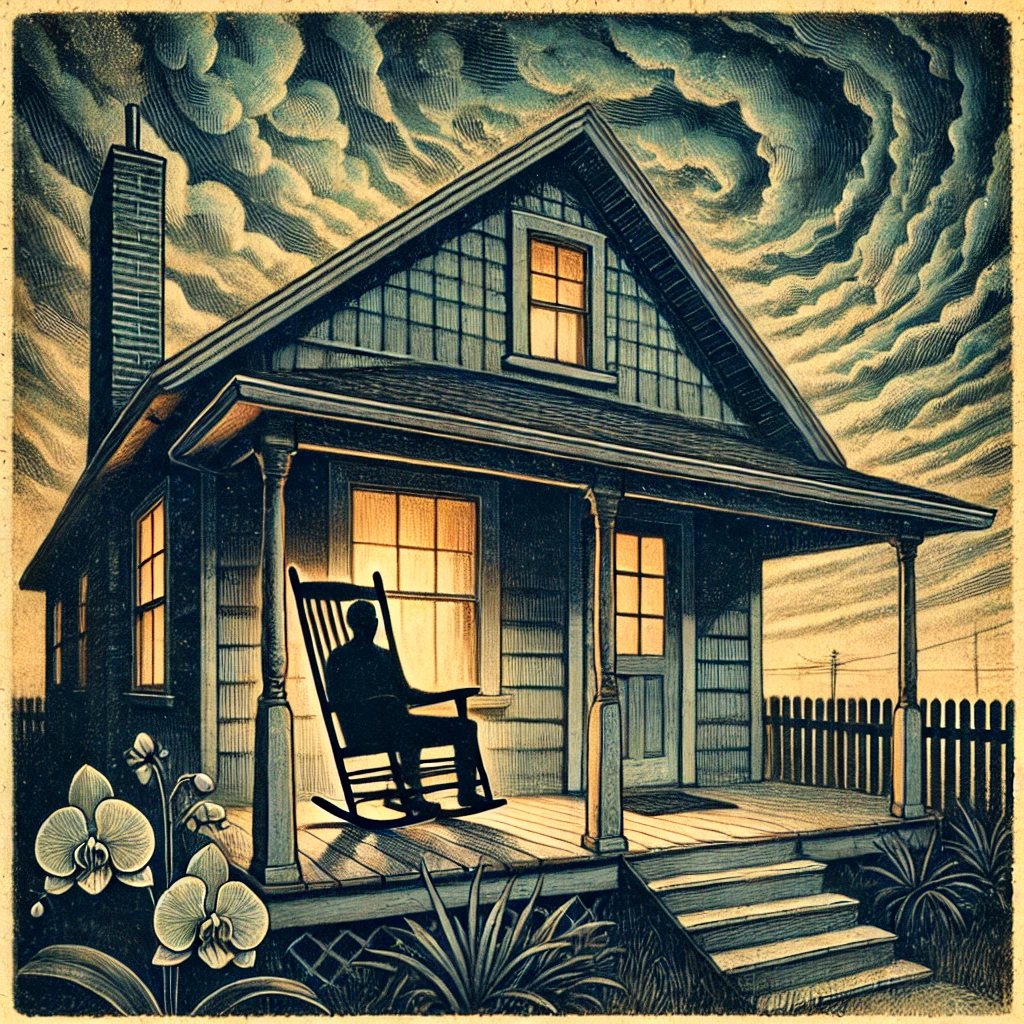

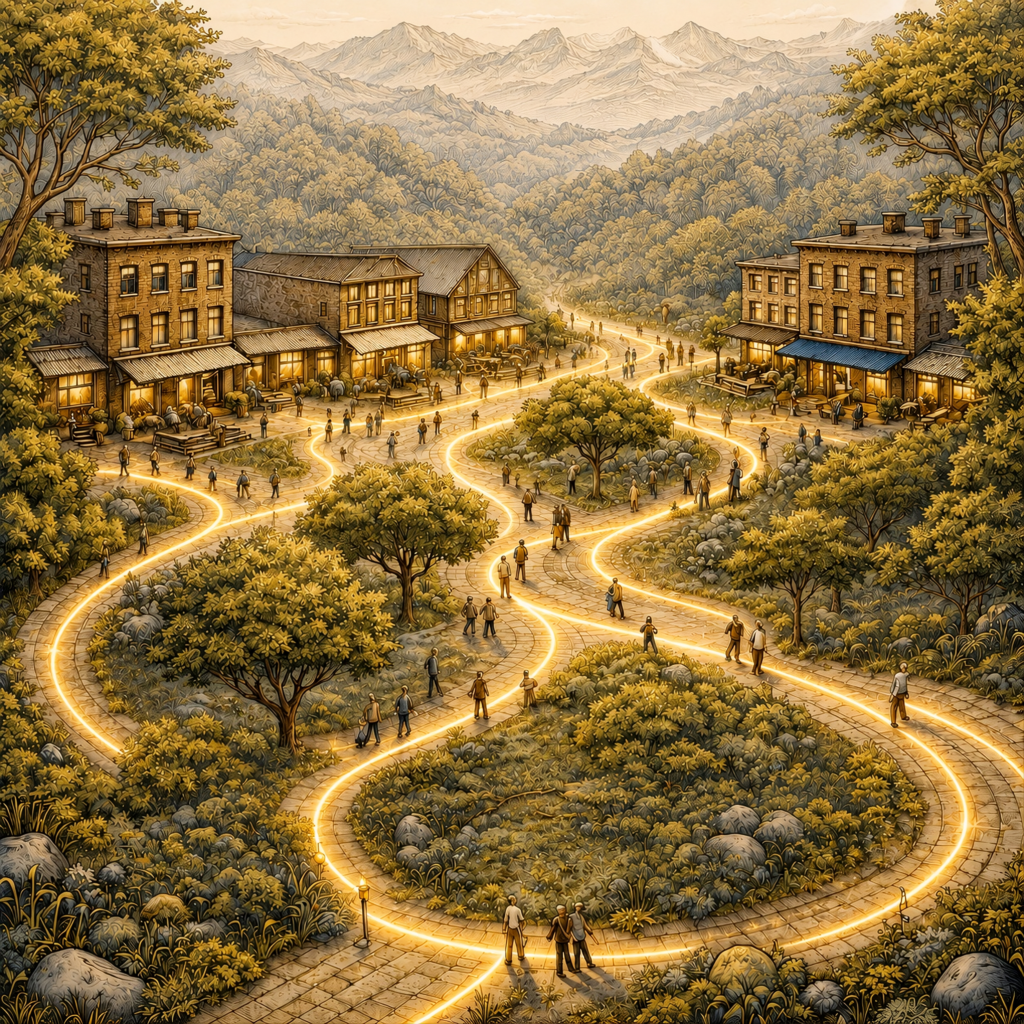
Algorithm
Ben Davis met Susan Hale the way reserved people often meet—through someone louder. Two coworkers in the data department had decided, with the confidence of people meddling from a safe distance, that Ben and Susan belonged together. Both kept neat desks, spoke softly, and seemed more comfortable around books than crowds. One coworker joked that if Ben and Susan arranged their lives into spreadsheet rows, every column would line up. So they introduced them. Ben arrived in a pressed gray button-down, sleeves rolled exactly once at each wrist. Tall and narrow-framed, with parted brown hair and wire-rimmed glasses, he looked like a man still weighing a thought from minutes ago. Susan wore a navy cardigan over a plain white blouse, her dark hair pinned into a low bun. A few loose strands softened her face, and her careful eyes suggested she noticed more than she said. Their first conversation passed with no sparks, which somehow suited them. Ben paused before speaking, as if weighing each word, and Susan asked questions that moved the conversation forward naturally. Neither tried to impress the other. Neither considered it necessary. Within a year, they married. The courthouse clerk stamped their papers without looking up. Ben and Susan exchanged a brief smile, and by afternoon, they were home again, reading in the living room as if nothing had changed except the paperwork. Their life settled into a rhythm so exact it could have passed for design. Each morning, the alarm chimed at 6:45 while pale sunlight slipped between the blinds. They brushed their teeth at adjacent sinks, moved around each other, never bumping elbows, and left the apartment at 7:15. At work, they parked in the company lot’s third row—two spaces from the curb, always the same spot—and entered the building as the shift bell echoed down the hall. The data department felt almost monastic. Ben typed steadily while Susan reviewed entries beside him, their screens glowing with numbers and names as handwritten forms became clean digital records. At noon, they ate beneath the buzz from fluorescent lights: sandwiches, water, sometimes yogurt. At five, they clocked out and walked to the car at an easy pace. Evenings followed the same pattern. Dinner simmered while one read nearby. Sometimes they watched documentaries on arctic expeditions, lost civilizations, or deep-sea trenches—stories where danger unfolded on a screen while they sat safely on the couch. On Thursdays, they went to the movies because Thursday nights drew the smallest crowds. Their favorite place stood three blocks from their apartment: a small bookstore that smelled like paper and dust, where they drifted through the aisles and exchanged glances over titles the other might like. Adventure, conflict, discovery—they read about those things, but they never lived them. Their coworkers noticed. One afternoon, Derek leaned back in his chair and watched them over his lunch tray. Broad-shouldered and naturally loud, he wore a loosened tie, rolled sleeves, and the easy grin of a man who believed silence invited conversation. “You two ever do anything?” he asked. Ben looked up from his sandwich. “We read.” Derek laughed. “I mean anything exciting.” Susan tilted her head, considering the word like a problem at work. “Define exciting.” Derek pointed his fork between them. “You guys are like background characters in your own lives.” The comment didn’t sound cruel, but it followed them back to their desks. When Derek asked if they ever traveled, went somewhere random, or explored something they actually enjoyed, Ben and Susan looked at each other across the table. The idea felt unfamiliar and oddly bright. Finally, Susan said, “That’s… not a bad idea.” It marked the first spontaneous thing either had said in years. They planned a vacation with their usual care. A road map covered the dining table for several evenings as they marked towns calm enough to tolerate—places with diners, antique shops, bookstores, and wooded walking trails. They chose Riverglen, a town near a mountain range, where the online photos showed tidy streets and plain storefronts. Perfect. The drive took most of the afternoon. Ben followed the GPS while Susan read hotel reviews from her phone. “Clean rooms,” she said. “Friendly service. Continental breakfast from six to nine.” Ben nodded as the highway rolled between dark bands of evergreens. Then the GPS changed, and the blue route twisted across the screen. “Turn left,” the voice said. Ben frowned. “That’s not the route we selected.” “Maybe traffic,” Susan said. They followed it. The highway narrowed into a tree-lined road where branches met above the pavement in a loose canopy. The phone signal flickered, vanished for a second, then returned just as a sign appeared beside the road. WELCOME TO HARMONY. Ben slowed. Susan looked from the sign to the phone. “That’s not Riverglen.” The GPS chirped. “Recalculating.” It directed them out of town. Ben followed the road past a hardware store, a barber pole, a white church with a black steeple, and a row of narrow houses with trimmed lawns. Five minutes later, the same sign appeared again. WELCOME TO HARMONY. Ben tightened his grip on the wheel. They tried another road, then another, but each route curved through still streets and returned them to the same intersection, the same diner, the same sign beside the faded white lines. After the third loop, Ben parked near a diner with a flickering neon sign. “Maybe the GPS is malfunctioning.” Susan stepped out. At first, Harmony seemed ordinary, pleasant even. A woman crossed at the corner the moment the pedestrian light changed. A cyclist passed as traffic paused. A delivery truck pulled away from the curb just as another vehicle slowed to take its place. No one rushed, and no one seemed to wait. Then Susan watched a man drop a letter into a mailbox and step away just as a mail truck rolled to the curb. Her brow tightened. “Ben.” He saw it too. The town moved as if every gesture followed instructions. They checked into a roadside motel at